
Blog / Harrison Ford

Why Regular Oil Changes are Crucial for Your Ford's Longevity

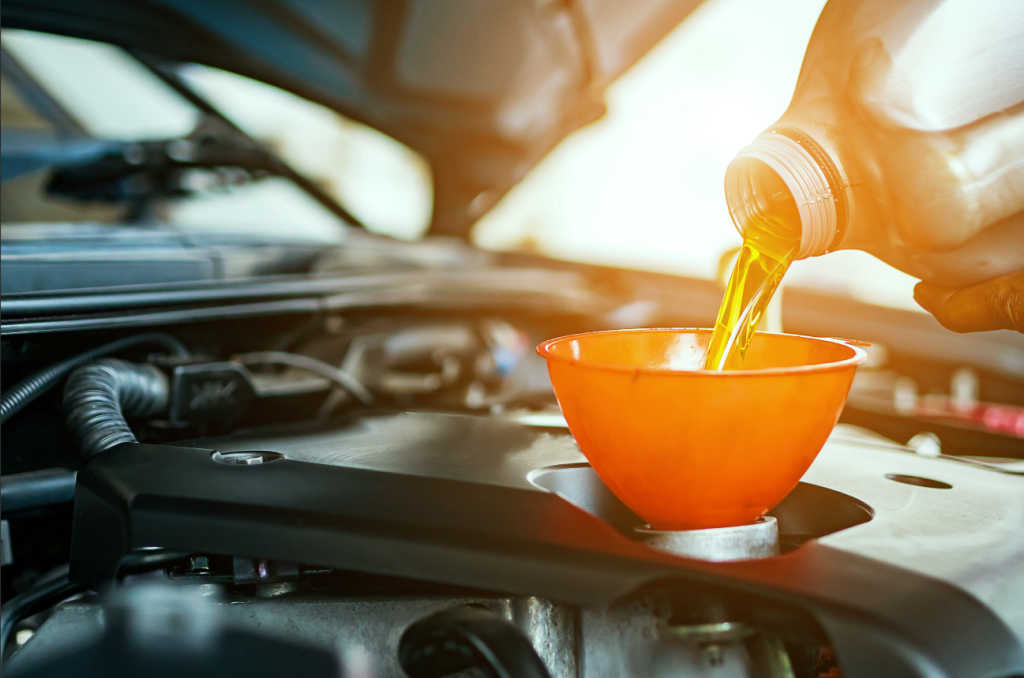
Someone changing the oil in their car.

Time for an oil change? Then it's time to visit your Ford dealer. We'd love to explain here why this simple maintenance task is so important and how it helps your Ford last longer.

Why Your Ford Will Last Longer With Regular Oil Changes From Your Ford Dealer

Less Friction

Friction is not something you want happening in your engine. It's a hot and violent environment in there, and you want to avoid all the pieces within the engine rubbing against each other any more than necessary. The less friction your engine parts undergo, the longer each part individually lasts.

That's where oil comes in. It lubricates all the moving parts so that they can work together without rubbing against each other. If your oil levels get low or if your oil gets filled with metal shavings because it hasn't been changed, these parts start to wear down faster than they should.

Clean the Engine

Above, we mentioned getting shavings in your oil. As you drive, the oil does its job: which is to remove any gunk that shouldn't be in the engine. This includes both dirt and road grime but also tiny metal shavings and particles from the engine's metal.

The oil carries all of this to the oil filter, which takes it out of the oil and sends clean the oil back through the engine. Over time, the oil filter fills up and can't clean the oil like it should. When that happens, the oil becomes thick and doesn't lubricate properly. If you keep your engine oil swapped out and regularly change the filter, you avoid this problem.

No Risk of Overheating 

Again, your engine is an extremely hot environment, and too much heat is very bad. One of the things that oil does is control the temperature of the engine. Obviously, the cooling system is a major player in protecting the engine from heat, but you also do need the oil. The cooling system can't do it alone, and if the motor oil gets too old, your risk of overheating grows. The hotter your engine runs, the more likely it is to blow a gasket or seize up.

Stop Rust In Its Tracks

Rust is the number one enemy of metal. One of the little-known benefits of modern synthetic motor oil is that it's an excellent anti-corrosive. Not only does it protect your vehicle from rust caused by rain or water on the road, but also from chemical corrosion. As with the oil's other properties, this one is compromised with age.

If it's time to get the oil swapped out in your vehicle, contact us at Harrison Ford in Wellington, OH now to get it done. 
Posted in:

Related Posts

A 2025 Ford ranger off roading.

Four Signs Your Ford's Oxygen Sensor Needs Replacement

The oxygen sensor plays an important role in the consumption of fuel by checking the level of unburned oxygen left in your exhaust system. This sends a message to the ECU, allowing the air-fuel ratio to be altered if needed. If your car shows signs that the sensor isn't working properly, you may need an oxygen sensor replacement. Your local Ford dealership will be able to run diagnostics and install a replacement. more 1: Reduced Fuel Efficiency If the oxygen sensor isn't working properly, the ECU might not receive the right message. This can result in the fuel mixture running too rich (not enough oxygen) or too lean (too much oxygen). A rich mixture uses too much fuel, leading to incomplete burning and waste. A lean mixture can create difficulties with combustion, requiring the use of more throttle, which in turn burns more fuel. Although there are other reasons that you might be using excess fuel, if you notice you're having to stop for gas more frequently, it's worth getting the oxygen sensor checked. 2: Black Smoke From the Exhaust A poor air-fuel mixture can lead to incomplete combustion. The unburned fuel exits through the exhaust, appearing as black smoke. This can also cause problems with fuel emissions and has the potential to damage the catalytic converter. 3: Misfiring or Stalling Engine There are a lot of processes within the engine that rely on the right air-fuel mix. Associated problems include flooding, poor combustion, and loss of stability which can lead to misfires and engine stalls. A sensor that is starting to fail may also fail to communicate changes in speed or engine load. This can cause delays in engine responses, stalling, and periodic misfires. 4: Unpleasant Smells If you notice a rotten egg smell, it's often a good indication there's an issue within your exhaust system. This could include a malfunctioning oxygen sensor. When fuel is running too rich, there is leftover fuel that can't be burned. The catalytic converter can't convert this excess fuel into sulfur dioxide, leaving the characteristic rotten egg smell of hydrogen sulfide, or sometimes the odor of gasoline. Schedule an Oxygen Sensor Replacement at Your Local Ford Dealership The warning signs that your oxygen sensor is failing can sometimes be hard to interpret because they mimic other faults. Your local dealership has all the necessary technology to run diagnostics on your car and will be able to identify the root of any problem. We have been servicing the local community for more than 50 years and are proud to offer a wide range of services. If your oxygen sensor needs to be replaced, or you think you might have another problem, contact us today at Harrison Ford in Wellington, OH and we'll be happy to help.

The infotainment system on the new 2025 Ford Bronco Sport.

Ford's Advanced Infotainment System: Tips and Tricks for New Users

The Ford Infotainment system provides a wealth of options to enhance the driving experience. However, these can be overwhelming for new system users. Fortunately, with a little time, a few tricks, and Ford dealer support, new Infotainment users can feel right at home using this intuitive, connected addition to their driving experience. more Spend Time with Setup New users should dedicate up to half an hour going through the system to familiarize themselves with it and sign into the various apps so they can enjoy a seamless experience. Additionally, connecting any cell phones that will use the Apple CarPlay or Android Auto features at this point makes later use more seamless. Understand the Voice Recognition Ford uses a natural voice recognition pattern for its hands-free controls in the Infotainment system. If someone is not used to this system type, it can take some getting used to. However, natural recognition simply means the system can process directions like "call John Smith" or "provide directions to the nearest grocery store," which makes it practical while driving. Check Out Navigation The option to use the built-in navigation on the Infotainment screen can be immensely helpful. This system is designed to make navigation more straightforward than a phone app, and the bigger screen makes seeing upcoming turns more practical. Taking the time to try out a few destinations makes it easier to use when needed. Customize Applications Ford allows customization within the Infotainment applications, so checking that out when not trying to use them on the road is a plus. From typical settings to driving-specific features, these options provide a customized level of connectivity that is hard to beat. Plus, depending on the Infotainment system, drivers may be able to add additional applications and features. Schedule Software Updates One of the fantastic features of Ford's Infotainment is its connectivity, particularly for updating. Ford built the Infotainment system to receive over-the-air updates with options for using connected Wi-Fi. Much like a computer, users can set a regular schedule. These updates ensure the Infotainment system operates at maximum efficiency with the latest available features. Visit a Ford Dealer for Hands-On Assistance Dealers can also assist with Infotainment systems, and visiting is often a quick way to address a problem. Since dealers specialize in Ford systems, visiting is more efficient than browsing the internet for a solution in many cases, plus we have the most up-to-date information to help troubleshoot. It's a win-win and can help keep the vehicle performing as a driver needs. Infortainment systems have come a long way in adding technology and connectivity to vehicles. Ford's system provides a seamless experience that new users can use immediately with a few tricks. Come visit us at Harrison Ford in Wellington, OH, today to see this system in action.

A mechanic working on the underside of a car in the Wellington, OH area.

The Ultimate Guide to Ford Scheduled Maintenance: What You Need to Know

Routine maintenance makes an enormous difference to the performance and lifespan of any vehicle. If you want your car's acceleration, steering, brakes, suspension, and overall comfort and safety to remain in optimal shape for as long as possible, follow the Ford maintenance tasks outlined below. Your local Ford dealer can help you plan, schedule, and keep up with a car servicing routine that suits your busy lifestyle. more Check and Flush Fluids Frequently Your car depends on various fluids that keep essential parts lubricated, clean, corrosion-free, and pressurized. If you neglect to keep your motor oil, coolant, transmission fluid, brake fluid, windshield wiper fluid, and power steering fluid topped up and fresh, wear and tear will accelerate, leading to expensive repair jobs and diminished overall performance. Motor oil needs to be changed twice a year for most drivers. Coolant should be checked and replenished frequently and flushed completely at least every two years. Brake fluid tends to last 45,000 miles, power steering fluid 50,000 to 75,000 miles, and automatic transmission fluid 60,000 to 100,000 miles. Windshield wiper fluid should be topped up as and when required, depending on how much you use your wipers. Rotate and Change Your Tires Car tires endure a great deal of wear and tear and so also need to be maintained with care. With tires, you should check the air pressure once a month, have them rotated twice a year, and change them as soon as the tread depths reach 2/32 of an inch or a tire becomes significantly damaged. Align and Balance Your Wheels When a car is new, the wheels are perfectly aligned. But as you drive, slight knocks and bumps gradually push each wheel out of alignment, which can begin to hinder your handling and vehicle control. Uneven tires and other factors can also cause wheels to become slightly unbalanced in weight. To rectify both of these issues, it's advisable to have your wheels aligned and balanced twice a year. Inspect and Replace Brake Components Your brakes are vital to road safety. It's generally recommended to have brakes serviced every six months. During an inspection, the technician can remove and examine each rotor, brake pad, and caliper, and replace any faulty or excessively worn parts. They'll also check the fluid and fluid lines and repair any leaks. Ask Your Ford Dealer To Arrange a Routine Schedule There are various other essential car services, including changing air filters, testing the battery, and inspecting belts and hoses. It's best to set up a comprehensive maintenance schedule at your local dealership. Visit Harrison Ford in Wellington, OH, today to have your car serviced by experienced technicians. We're a local, family owned and operated dealership that's been providing top-notch cars, deals, and customer service to the area's drivers for over 50 years.