
Blog / Harrison Ford Service

Blog

All Harrison Ford Service Harrison Ford Wellington, OH Ford Dealer SUV Trim Levels Wellington, OH Ford Service 2025 Ford Ranger Ford Trucks 2024 Ford Expedition 2025 Ford Bronco Sport 2025 Ford Expedition 2025 Ford Explorer 2025 Ford F-150 2025 Ford Maverick Ford F-150 Infotainment System Truck 2024 Ford Bronco 2024 Ford Bronco Sport 2024 Ford Edge 2024 Ford Escape 2024 Ford Explorer 2024 Ford Ranger 2025 Ford E-Transit 2025 Ford Escape 2025 Ford Mustang 2025 Ford Mustang Mach-E Cargo Van Coupe Electric Vehicles Ford History Ford Safety Features Ford Tire Alignment Hybrid Vehicles Oil Change Oxygen Sensor
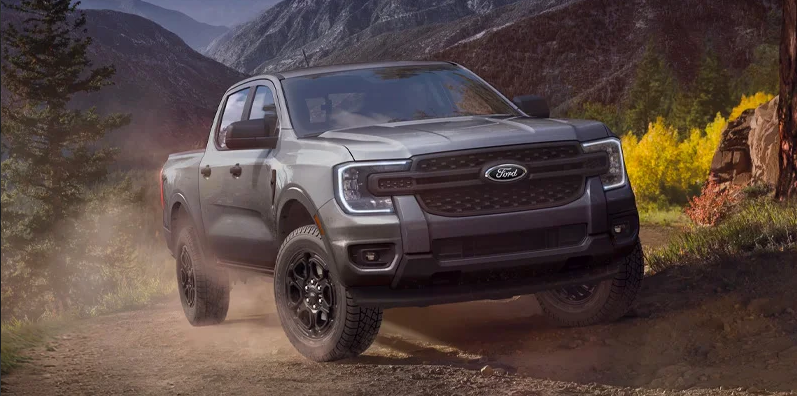
A 2025 Ford ranger off roading.

Four Signs Your Ford's Oxygen Sensor Needs Replacement

The oxygen sensor plays an important role in the consumption of fuel by checking the level of unburned oxygen left in your exhaust system. This sends a message to the ECU, allowing the air-fuel ratio to be altered if needed. If your car shows signs that the sensor isn't working properly, you may need an oxygen sensor replacement. Your local Ford dealership will be able to run diagnostics and install a replacement. more 1: Reduced Fuel Efficiency If the oxygen sensor isn't working properly, the ECU might not receive the right message. This can result in the fuel mixture running too rich (not enough oxygen) or too lean (too much oxygen). A rich mixture uses too much fuel, leading to incomplete burning and waste. A lean mixture can create difficulties with combustion, requiring the use of more throttle, which in turn burns more fuel. Although there are other reasons that you might be using excess fuel, if you notice you're having to stop for gas more frequently, it's worth getting the oxygen sensor checked. 2: Black Smoke From the Exhaust A poor air-fuel mixture can lead to incomplete combustion. The unburned fuel exits through the exhaust, appearing as black smoke. This can also cause problems with fuel emissions and has the potential to damage the catalytic converter. 3: Misfiring or Stalling Engine There are a lot of processes within the engine that rely on the right air-fuel mix. Associated problems include flooding, poor combustion, and loss of stability which can lead to misfires and engine stalls. A sensor that is starting to fail may also fail to communicate changes in speed or engine load. This can cause delays in engine responses, stalling, and periodic misfires. 4: Unpleasant Smells If you notice a rotten egg smell, it's often a good indication there's an issue within your exhaust system. This could include a malfunctioning oxygen sensor. When fuel is running too rich, there is leftover fuel that can't be burned. The catalytic converter can't convert this excess fuel into sulfur dioxide, leaving the characteristic rotten egg smell of hydrogen sulfide, or sometimes the odor of gasoline. Schedule an Oxygen Sensor Replacement at Your Local Ford Dealership The warning signs that your oxygen sensor is failing can sometimes be hard to interpret because they mimic other faults. Your local dealership has all the necessary technology to run diagnostics on your car and will be able to identify the root of any problem. We have been servicing the local community for more than 50 years and are proud to offer a wide range of services. If your oxygen sensor needs to be replaced, or you think you might have another problem, contact us today at Harrison Ford in Wellington, OH and we'll be happy to help.
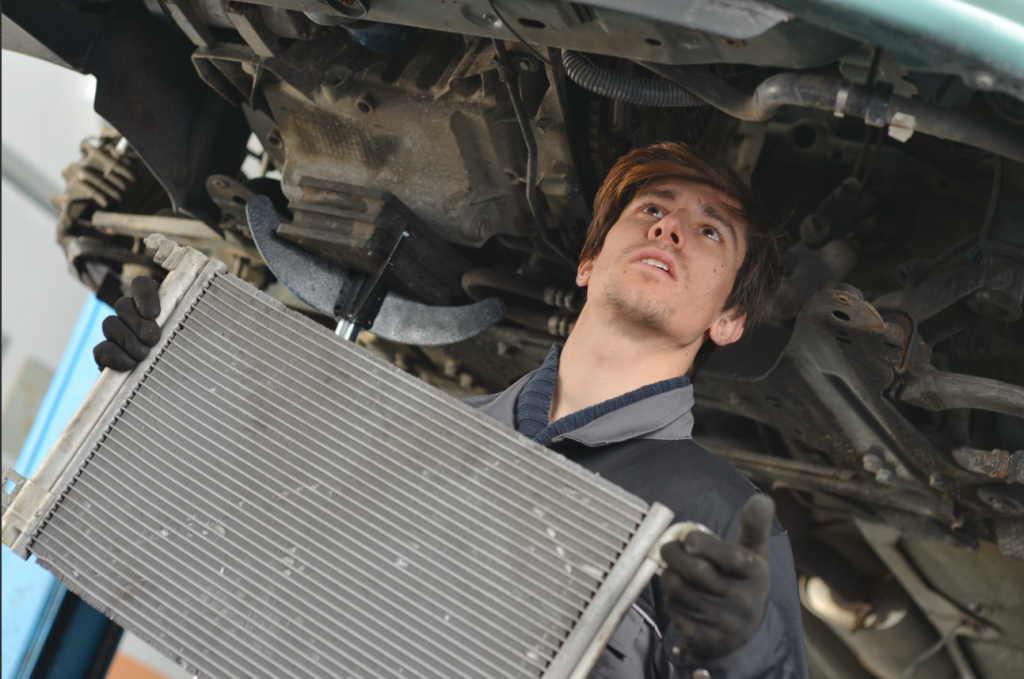
A mechanic working on the underside of a car in the Wellington, OH area.

The Ultimate Guide to Ford Scheduled Maintenance: What You Need to Know

Routine maintenance makes an enormous difference to the performance and lifespan of any vehicle. If you want your car's acceleration, steering, brakes, suspension, and overall comfort and safety to remain in optimal shape for as long as possible, follow the Ford maintenance tasks outlined below. Your local Ford dealer can help you plan, schedule, and keep up with a car servicing routine that suits your busy lifestyle. more Check and Flush Fluids Frequently Your car depends on various fluids that keep essential parts lubricated, clean, corrosion-free, and pressurized. If you neglect to keep your motor oil, coolant, transmission fluid, brake fluid, windshield wiper fluid, and power steering fluid topped up and fresh, wear and tear will accelerate, leading to expensive repair jobs and diminished overall performance. Motor oil needs to be changed twice a year for most drivers. Coolant should be checked and replenished frequently and flushed completely at least every two years. Brake fluid tends to last 45,000 miles, power steering fluid 50,000 to 75,000 miles, and automatic transmission fluid 60,000 to 100,000 miles. Windshield wiper fluid should be topped up as and when required, depending on how much you use your wipers. Rotate and Change Your Tires Car tires endure a great deal of wear and tear and so also need to be maintained with care. With tires, you should check the air pressure once a month, have them rotated twice a year, and change them as soon as the tread depths reach 2/32 of an inch or a tire becomes significantly damaged. Align and Balance Your Wheels When a car is new, the wheels are perfectly aligned. But as you drive, slight knocks and bumps gradually push each wheel out of alignment, which can begin to hinder your handling and vehicle control. Uneven tires and other factors can also cause wheels to become slightly unbalanced in weight. To rectify both of these issues, it's advisable to have your wheels aligned and balanced twice a year. Inspect and Replace Brake Components Your brakes are vital to road safety. It's generally recommended to have brakes serviced every six months. During an inspection, the technician can remove and examine each rotor, brake pad, and caliper, and replace any faulty or excessively worn parts. They'll also check the fluid and fluid lines and repair any leaks. Ask Your Ford Dealer To Arrange a Routine Schedule There are various other essential car services, including changing air filters, testing the battery, and inspecting belts and hoses. It's best to set up a comprehensive maintenance schedule at your local dealership. Visit Harrison Ford in Wellington, OH, today to have your car serviced by experienced technicians. We're a local, family owned and operated dealership that's been providing top-notch cars, deals, and customer service to the area's drivers for over 50 years.

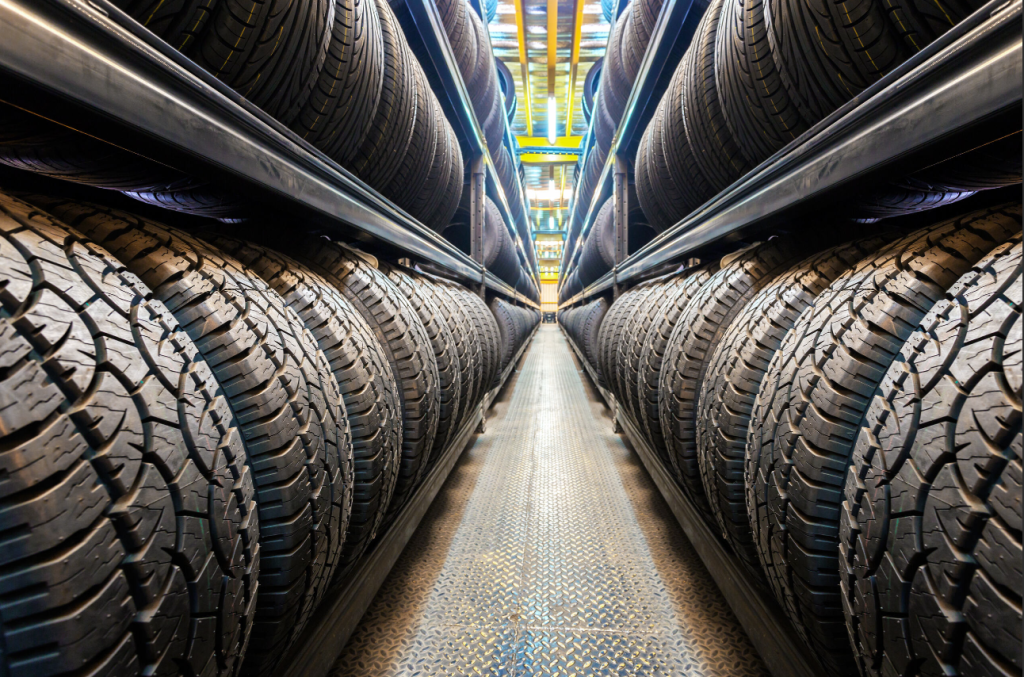
Rows of tires in a warehouse near Harrison Ford in Wellington, OH.

Time for New Tires? Visit Your Ford Dealership

Given how important tires are for overall handling and safety on the road, it's unwise to ever neglect the tires of your car. Always keep an eye out for the following signs of tire trouble. And when it's time for new tires, don't hesitate to have them installed at your local Ford dealership. more Visible Signs of Damage Any deep or particularly long cuts might threaten the tire's structural integrity. Likewise, embedded objects may necessitate a repair job or replacement. Bulges or blisters also mean the tire has to go, and rapidly spreading or deepening cracks should never be ignored. Steadily Falling Air Pressure Check the air pressure of your tires at least once a month. If any one of your tires keeps losing pressure more than the others, have it checked by a technician, no matter how minor the air loss seems to be. Under-inflated tires pose a risk as too much rubber comes into contact with the road, which generates excess friction, accelerates wear and tear, and can even cause a sudden blowout. Excessive Noise and Vibrations When tires develop problems or become uneven, the distribution of weight and road friction becomes awkwardly spread across the tires. This often leads to excessive road noise and vibrations. So, if your car ever feels unusually shaky or noisy, consider having your tires inspected. Tires More Than Six Years Old Most tire manufacturers have a recommended use-by-date, after which it becomes unsafe to drive with their tires. This maximum age of safe usage is often six years, but sometimes it can be as much as ten years. Check the maximum age for your particular tires and have them replaced once you are near the limit, even if the tires still appear to be in good condition. Momentary Losses of Traction If you ever sense a momentary loss of traction, perhaps while driving over a puddle, pay close attention to your tires. If the experience repeats itself, you may need to have your tires replaced. Drivers should always feel completely confident in the ability of their tires to grip all kinds of road surfaces. Uneven Wear and Tear Tires naturally tend to become uneven in size over time. This is because the weight and various pressures from the vehicle are not exactly the same at each corner of the car. Routine tire rotation can usually mitigate this uneven tire wear. However, if a set of four tires becomes too uneven in size, even rotation might not be enough. In this case, you'll usually need a new set of tires. Have your tires rotated or replaced today at Harrison Ford. We're a locally owned and operated dealership providing a one-stop-shop for all things Ford for the drivers of Wellington, OH, and the surrounding region.

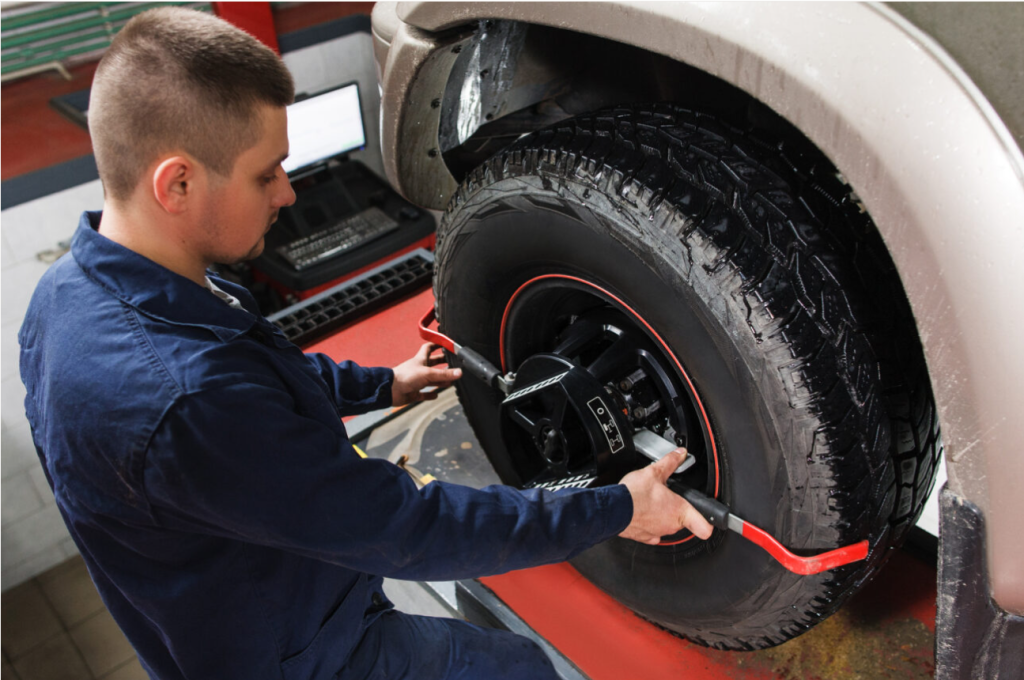
A Ford mechanic in Wellington, OH working on a tire alignment

The Importance of Wheel Alignment in Fords: Symptoms and Solutions

Any Ford dealership will tell you that wheel alignment is a key element of maintenance that you should never overlook. Crucial to keep your vehicle running safely and smoothly, properly aligned wheels will ensure that your ride is a comfortable one too. But why is getting the alignment of your wheels checked so important? Here we take a look at some of the signs to look for that indicate a problem, as well as how to resolve the issue. more Why Does Wheel Alignment Matter? If your Ford's wheels aren't properly aligned, your safety is at risk whenever you're on the road. Misalignment will cause your vehicle to pull to one side and shudder when driving at speed. Your tires will have reduced traction too, resulting in impaired handling. Not only that, but your tires will experience uneven wear, costing you more in maintenance bills in the long run. How Will Properly Aligned Wheels Help? When your wheels are correctly aligned, your vehicle will run more smoothly on the road. It'll be easier to handle and won't veer to the side when driving. Your ride will be far more comfortable too, with no shaking or rattling when moving at speed. You'll benefit from improved safety since making sharp turns and sudden stops will be easier and less risky thanks to better traction. Furthermore, your tires will last far longer, saving you money. As your vehicle will become more fuel efficient too, you'll benefit from a double saving as you'll visit the gas station less often! Do My Wheels Need Aligning? There are some key signs to look for that will suggest your wheels are out of alignment. You may find your Ford pulls to the right or left while driving, or that your vehicle feels more wobbly than usual. Your tires may be wearing out more rapidly on one side of the vehicle than the other too, and they may be making unusual noises. These symptoms all suggest it's time to get your wheels checked for proper alignment. Even if you don't experience these symptoms, it's still a good idea to get your wheels checked for proper alignment every 6000 miles. That'll ensure your vehicle remains in top condition at all times. Do I Need To Visit My Ford Dealership To Get My Wheels Aligned? Getting your wheels properly aligned isn't something you can do yourself without specialist knowledge and equipment. It's easy to take your Ford to your local dealership. The mechanics can take a look at your wheels and make sure their correctly aligned without any ​difficulties. ​If you're experiencing the signs of poorly aligned wheels or you ​haven't had your wheels checked recently, book an appointment with Harrison Ford in Wellington, OH today. Our ​professional team ​are here to keep you motoring safely!

Contact Us

Fill out this form below and we'll contact you shortly
*Required Fields